 English
 中文
 русский
 Português


The Role of Ballistics Calculators in Enhancing Hunting Precision
During hunting activities, accurate ballistics calculator is crucial for improving shooting precision and effectiveness. This technical document aims to introduce the basic concepts of ballistics and parameter settings. By analyzing factors such as ballistic coefficient (BC), firearm classifications, and bullet characteristics, users can gain a deeper understanding of ballistics calculator, thereby enhancing shooting accuracy and optimizing the overall hunting experience. 1. Definition of Bullet Trajectory Bullet Trajectory refers to the path traveled by a projectile (such as a bullet, shell, etc.) through the air, encompassing the entire process from the moment of firing, through its flight in the air, to the point where it impacts the target. 2. Calculation of Ballistic Coefficient · Ballistic Coefficient (BC) is a parameter used to evaluate the air resistance a bullet encounters while flying through the air. A higher BC value indicates less air resistance, meaning the bullet is better at maintaining its speed and energy during flight. This results in a more stable trajectory and better performance, especially for long-range shooting. BC values are typically provided on the bullet packaging or listed on firearm websites. When calculating the BC, the G1 model is commonly used, which is suitable for most non-streamlined projectiles (such as the majority of rifle bullets). The general formula for BC calculation is as follows: · Mass(m):The weight of the bullet, typically measured in grains (gr). · Diameter(d):The caliber of the bullet, measured in inches. · Form Factor(i):A coefficient related to the shape and aerodynamic characteristics of the projectile. In the G1 model, the bullet is typically designed with a flat or pointed tip, which is common for hunting ammunition. Here are some common hunting bullets and their corresponding BC values: Bullet Model Common Bullet Weight(grains) BC Value Range Form Factor(i) .223 Remington 55–77 gr 0.200–0.400 1.0–1.2 .243 Winchester 55–105 gr 0.300–0.500 0.95–1.1 .270 Winchester 130–150 gr 0.400–0.500 0.9–1.0 .30-06 Springfield 150–180 gr 0.400–0.615 0.9–1.05 6.5mm Creedmoor 120–147 gr 0.500–0.650 0.85–1.0 7mm Remington Magnum 140–175 gr 0.500–0.620 0.85–1.0 .338 Lapua Magnum 250–300 gr 0.600–0.800 0.85–0.95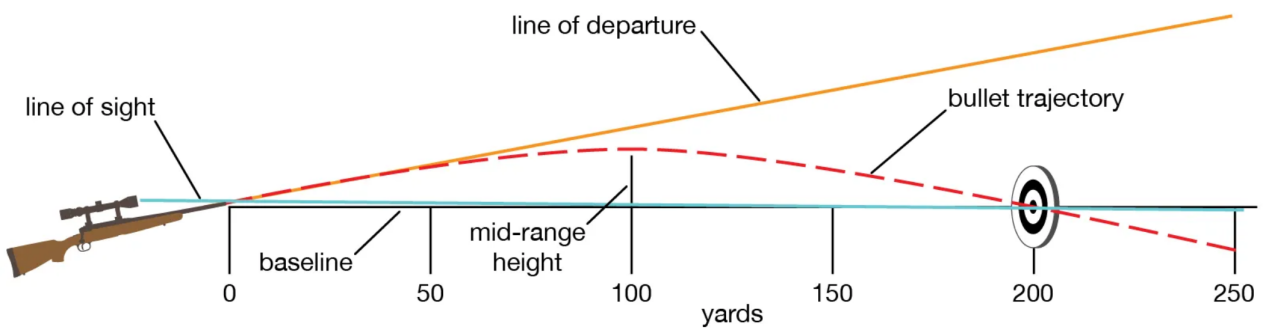
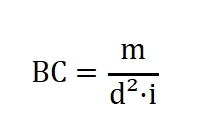
Involved parameters:
CONTACT US
 Add:Room 815, 8th Floor, Yongcheng Scientific Research Building, Gushu 2nd Road, Bao'an District, Shenzhen City, Guangdong Province, China.
 Tel/Whatsapp:+8618279457417
 E-mail:szwency@163.com